
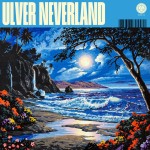
A career spanning three decades has taken Ulver from the icy peaks of Norwegian black metal through winding paths of electronica, ambient, and chamber music. It seemed as if the band had explored every conceivable space. With Neverland, Kristoffer Rygg and his collaborators demonstrate once again that true artists never cease to find new doors whose existence was previously unknown to us.
Neverland is not just an album, it is a séance with one’s own childhood. The title refers to J.M. Barrie’s mythical realm, a place where time stands still but growing up remains a conscious choice. Ulver take this allusion and break it through their own dark lens. Their Neverland is not a safe place, it is a place of mourning for things that are irretrievably lost.
Musically, the music moves in a field that could be described as “nocturnal, cinematic dream pop.” Synthesizers drift through the pieces like fog, while Rygg’s voice, which has developed into a deeply intimate instrument, alternates between soft speaking and haunting recitation.
The first track immediately draws listeners into a state of alert trance. Ulver have always understood that atmosphere forms the foundation of music. The production produces a sharpness that is almost painful; every detail, every subtle nuance seems precisely placed without seeming cold.
What sets Neverland apart from earlier works is its clear directness. Whereas albums such as The Assassination of Julius Caesar worked with ironic distance, here a window opens onto something frighteningly sincere. The music is more accessible, more melodic—and precisely because of this, more disturbing in its emotional impact.
Some moments on the album feel like looking at a photo of a deceased person. This bittersweet feeling runs through every song like a common thread. Ulver have created a sound that is both comforting and inconsolable. The rhythmic structures pulsate like a heartbeat in a half-sleep, palpable but muffled, as if coming through walls of water. Electronic beats combine with organic textures to create something that seems neither entirely human nor entirely mechanical. The music of a threshold, an in-between space.
Ulver is characterized by a refusal to repeat itself. Nevertheless, Neverland strangely feels like the band’s entire journey so far. Echoes of their black metal beginnings resonate in the darker sections, the experimental excursions of their middle years are reflected in unexpected sound choices, and the mature elegance of their more recent works gives the music stability.
Neverland is the work of a band that no longer has anything to prove and therefore risks everything. It is an album about longing for a place that never existed—or perhaps only in those fleeting moments between waking and sleeping, when reality loses its contours.
With this work, Ulver adds another chapter to a body of work that ranks among the most remarkable in contemporary music. Neverland avoids escapism, recognizing that escapism itself is a deception—while at the same time defiantly asserting that this deception has its own value.
what an epic album for a brilliantly relaxed start to 2026. ulver above all else!